






Showing posts with label Great Speech. Show all posts

Tuesday, November 22, 2025

Time to Restructure and Strengthen our Institutions-Sampitroda

       Excerpts from the Keynote Lecture Delivered by Sam Pitroda at Nehru Centre, Mumbai in March, 2010
  • (Mr. Sam Pitroda is an internationally respected development thinker, policy maker, telecom inventor and entrepreneur, who has spent over four decades in Information and Communications Technology and related human and national development initiatives.
  • During his tenure as Adviser to Prime Minister Rajiv Gandhi in the 1980s, Mr. Pitroda headed six technology missions related to telecommunications, water, literacy, immunisation, dairy and oil seeds.
  • Mr. Pitroda was Chairman of India's National Knowledge Commission (2005-2009), an advisory body to the Prime Minister of India,
  • He is currently Adviser to the Prime Minister of India on Public Information Infrastructure and Innovations and is Chairman of the Expert Committee on the use of ICT in Railways. He is also the Chairman of the Smart Grid Task Force set up under the aegis of the Ministry of Power, Government of India)

We are indeed in a very critical time in the history of India. The next ten years are going to really dictate the destiny of this country for perhaps the next 100 years to come. And I feel very strongly about it based on my own personal experiences of the last 25 years. We all know the place that India had in the history of world civilization. We all know that people have looked to India for centuries. We were the pioneers in higher education with Nalanda and Takshasila. We were really the beacon of knowledge where the Buddhas of the world went around spreading knowledge. We had the wealth, wisdom, culture, art, craft and music second to none. Our diversity has been a great asset for lots of innovations in the past. Diversity is always a fertile ground for innovations. We have given this world ‘zero’, non-violence, several religions, mathematics, astrophysics and more. But, partly because of our internal conflicts, we were colonized for a period of time. Howver, the free India, as of 1947, did get the right kind of vision from our founding fathers. They had the courage to focus on education, scientific research and development, infrastructure and indigenous capabilities. Look at the amount of investments that went into higher education in India - setting up of all the laboratories, CSIR, agricultural research, medical research etc. All of the investments that we made in the early ‘50s took almost fifty years to see substantial gains. I had an opportunity to work with Rajiv Gandhi in the early ‘80s when we were convinced that the need of the hour then was to start building institutions and infrastructure to connect India.
In the next twenty years, we will be able to lift most of our population that is below the poverty line. So India in a globalised world has to be seen in terms of
1.  Free India that invested in education and science and technology,
2.  A connected India that started investment in connectivity in the ‘80s,
3.  Economically liberalized India with an industry that created a large number of entrepreneurs who, in turn, created substantial wealth in the form of jobs.
Today, when we look at these three factors, we realize that the next big challenge is really skill-set. In spite of a billion people today, we do not have enough qualified people in any discipline. We do not have enough truck drivers, welders, plumbers, scientists, mathematicians, engineers. There is not a single category where we have the required number of qualified skilled workers. This is a major challenge if India is to play a significant role in the globalised world of tomorrow. So, four years ago, Prime Minister Manmohan Singh decided to set up a National Knowledge Commission to look at various aspects related to knowledge with a specific focus on:
•  Access to knowledge,
•  Knowledge concepts,
•  Knowledge creation,
•  Knowledge applications
•  Knowledge services
Access implied languages, translations, libraries, broadband connectivity, wireless networks, portals, affirmative action programmes and reservation policies.
Concepts included the education paradigm - school education, vocational education, distance learning, open courseware, teachers training, sending more children to maths and science and generating more quality PhDs.
Knowledge creation included innovations, entrepreneurship, patents, copyrights, and trademarks.
Knowledge applications focused on health, small and medium-scale industries, traditional knowledge and applications in agriculture.
Knowledge services included e-governance. So we looked at a sum total of 27 subjects and submitted around 300 recommendations to the government. You can go to www.knowledgecommission.gov.in and you will see all of these documents. A lot of this work is now in process. As a result of discussions at the Knowledge Commission and as a result of participation from many others from industry, academics etc the government of India has decided to invest around $70 billion in education in the Eleventh Plan which is five times more than ever in the history of India. So the eleventh Plan is all about education with a focus on skills development. The aim, then, was to really look at three key challenges in India. They were:
1. Disparity - between rich and poor, urban-rural, educated-uneducated.
2. Demography. India has 550 million below the age of 25... We need to produce 20 million new jobs every year, year after year. As a result, if we do not focus on creating employment and assets for the young generation of tomorrow, we will probably have a major crisis at hand. To me, these 550 million are the workforce for the world and not just for India. Everywhere else in the world, population is aging and decreasing while, in India, population is increasing and young.
3. Development. Everything is happening but it is not happening fast enough. We are not building roads fast enough. We are not building schools and colleges fast enough. We are not building power plants fast enough.
So how do we use knowledge to expedite the process of modernization? The demand for education is very high in this country. Indian parents will do anything compared to any other parents in the world to get the best education for their children. So the demand is very high. But the supply is not there. So 300,000 students appear for an IIT or IIM examination and 5000 get admitted. The remaining are equally good. I remember when we were trying to hire a lot of people at C-DOT, we had 1200 resumes in response to the first ad that we put in. My colleagues at C-DOT said, “How do we interview all these people to select the best?” I said, “Don’t worry. It’s very simple. Just throw all the resumes up in the air. Whatever you pick up, invite them and if they can walk straight, look in your eyes, smile, hire them. You can’t go wrong. There was no sense in asking them ten questions and complicating matters. Just trust them. These are the best of the best students from the IITs and other good universities. So, what are you going to interview? Just don’t waste your time. Because if you interview and ask them ten questions and someone answers eight and another answers seven, it would not make any difference. Just make sure that the person you are hiring is full of confidence, has strong self esteem, and is willing to work hard.”
Today, education is definitely on the national agenda. I believe that this is a great window of opportunity because we have a very large young population. We are prepared to invest on education. Our economy is growing at 8 to 10%. But, at the same time, I don’t have big dreams that India will become a superpower. I think that we have a lot of work related to disparity, development and poverty. On the one hand, we have this great need for education. On the other hand, we have 300 million people who are illiterate. Our cities are basically dying. We do not have the right infrastructure. We don’t have enough power, we will have water shortages. There are a whole lot of issues that we need to deal with.
Education, as we understand it today, essentially implies duster, blackboard, chalk, teacher, classroom, textbook, examinations, grades, certificates…This is based on the way I learnt 50-60 years ago. Today, to learn, one does not need any of this. One just has to go on the Internet and start learning. By exploring, one learns some right and some wrong. As a result of new technology, the learning models will change. Because of that, the concept of schools and colleges will change. Who decided that it should take four years to get a degree? For some reason, the entire world follows that. What does a degree really mean? Do you need a degree to do a job? Why do you get a certificate to exit? You need a certificate to enter. So, if I am going to be an engineer, I need to be certified when I enter the system and not when I exit the system. Do you really need a teacher? What does a teacher really do? A teacher creates and delivers content. The content is already created on the Internet. Delivery could be in multiple forms. One does not need a teacher, one needs a mentor. So, if there is a mentor, do we need a student-teacher ratio of 20:1? It should be 2000:1. Do I need to take the courses that my system tells me to take? Or can I take a course first in Picasso’s paintings, then bullion algebra, aerospace, and philosophy. Why can’t I do that? Just because some older person decided in his wisdom that I should take only some courses, why should I do that? Wouldn’t I have the freedom that I want to be a plumber for two years, work for five years and then go get a Ph.D in maths, and then be a mechanical engineer? Our systems don’t allow that. Our educational systems are not designed to give that seamless flexibility. We are all wound up in trying to promote higher education. But it is all useless.
Our debate is useless because the world is changing very fast. Our customer who is a 16-17 year old student is not part of the discussion. We are deciding his or her future. But the people who are deciding are people like me, with grey hair and in their ‘60s or ‘70s. They have no clue, they have no idea of what the future is going to look like. They are making those decisions based on their understanding of education which is completely obsolete. I remember when my little young children were growing up in the US, I would take them to the arcade games where one puts in a quarter and starts playing. Every time we would go to play, they would put in a quarter, never read instructions, and just start playing. On the other hand, I would have to read, and by the time I finished reading, the time would be over. I am supposed to be a computer scientist. That’s when I realized that their reflexes are very different. There is no way I can compete with them. So, I don’t even try. So how do we expect to advise these children? What qualifications
do we really have tot ell them what to do? They know it, they figure it out. They are on a totally different wavelength. Our education system today needs a complete overhaul.
If we focus on innovations, if we focus on new infrastructure, if we focus on young talent, I think we will definitely find our place in the globalised world. We cannot make a dent until we address our own basic challenges of disparity, demography and development with a focus on the people at the bottom of the pyramid and inclusive growth. To do all of these things, I am convinced that we have a great window of opportunity for the next ten years. The mandate that this government got in the last elections was very critical. The first five years of the Manmohan Singh and U.P.A.
To me, this is the time to position India for the globalised world. This is the time to really restructure and strengthen our institutions, build our human resources, skill sets, education, health, young talent. Then we will be able to position India in a very different way for a globalised world. The dream should not be to really increase our I.T. services business and other supplies from India to the world. The dream should be really to provide knowledge to the world in the 21st century. I hope this gives you a little feel for my view on it. I once again want to thank the organizers for the opportunity.

Thank you.
Read More

Friday, October 28, 2026

N R Narayana Murthy Speech at the New York University(Stern School of Business)

N R Narayana Murthy, chief mentor and chairman of the board, Infosys Technologies, delivered a pre-commencement lecture at the New York University (Stern School of Business) on May 9, 2007. It is a scintillating speech, Murthy speaks about the lessons he learnt from his life and career. 

Dean Cooley, faculty, staff, distinguished guests, and, most importantly, the graduating class of 2007, it is a great privilege to speak at your commencement ceremonies.


I thank Dean Cooley and Prof Marti Subrahmanyam for their kind invitation. I am exhilarated to be part of such a joyous occasion. Congratulations to you, the class of 2007, on completing an important milestone in your life journey.


After some thought, I have decided to share with you some of my life lessons. I learned these lessons in the context of my early career struggles, a life lived under the influence of sometimes unplanned events which were the crucibles that tempered my character and reshaped my future.


I would like first to share some of these key life events with you, in the hope that these may help you understand my struggles and how chance events and unplanned encounters with influential persons shaped my life and career.


Later, I will share the deeper life lessons that I have learned. My sincere hope is that this sharing will help you see your own trials and tribulations for the hidden blessings they can be.


The first event occurred when I was a graduate student in Control Theory at IIT, Kanpur, in India. At breakfast on a bright Sunday morning in 1968, I had a chance encounter with a famous computer scientist on sabbatical from a well-known US university.


He was discussing exciting new developments in the field of computer science with a large group of students and how such developments would alter our future. He was articulate, passionate and quite convincing. I was hooked. I went straight from breakfast to the library, read four or five papers he had suggested, and left the library determined to study computer science.


Friends, when I look back today at that pivotal meeting, I marvel at how one role model can alter for the better the future of a young student. This experience taught me that valuable advice can sometimes come from an unexpected source, and chance events can sometimes open new doors.


The next event that left an indelible mark on me occurred in 1974. The location: Nis, a border town between former Yugoslavia, now Serbia, and Bulgaria. I was hitchhiking from Paris back to Mysore, India, my home town.


By the time a kind driver dropped me at Nis railway station at 9 p.m. on a Saturday night, the restaurant was closed. So was the bank the next morning, and I could not eat because I had no local money. I slept on the railway platform until 8.30 pm in the night when the Sofia Express pulled in.


The only passengers in my compartment were a girl and a boy. I struck a conversation in French with the young girl. She talked about the travails of living in an iron curtain country, until we were roughly interrupted by some policemen who, I later gathered, were summoned by the young man who thought we were criticising the communist government of Bulgaria.

The girl was led away; my backpack and sleeping bag were confiscated. I was dragged along the platform into a small 8x8 foot room with a cold stone floor and a hole in one corner by way of toilet facilities. I was held in that bitterly cold room without food or water for over 72 hours.


I had lost all hope of ever seeing the outside world again, when the door opened. I was again dragged out unceremoniously, locked up in the guard's compartment on a departing freight train and told that I would be released 20 hours later upon reaching Istanbul. The guard's final words still ring in my ears  --  "You are from a friendly country called India and that is why we are letting you go!"


The journey to Istanbul was lonely, and I was starving. This long, lonely, cold journey forced me to deeply rethink my convictions about Communism. Early on a dark Thursday morning, after being hungry for 108 hours, I was purged of any last vestiges of affinity for the Left.


I concluded that entrepreneurship, resulting in large-scale job creation, was the only viable mechanism for eradicating poverty in societies.


Deep in my heart, I always thank the Bulgarian guards for transforming me from a confused Leftist into a determined, compassionate capitalist! Inevitably, this sequence of events led to the eventual founding of Infosys in 1981.


While these first two events were rather fortuitous, the next two, both concerning the Infosys  journey, were more planned and profoundly influenced my career trajectory.


On a chilly Saturday morning in winter 1990, five of the seven founders of Infosys met in our small office in a leafy Bangalore suburb. The decision at hand was the possible sale of Infosys for the enticing sum of $1 million. After nine years of toil in the then business-unfriendly India, we were quite happy at the prospect of seeing at least some money.


I let my younger colleagues talk about their future plans. Discussions about the travails of our journey thus far and our future challenges went on for about four hours. I had not yet spoken a word.


Finally, it was my turn. I spoke about our journey from a small Mumbai apartment in 1981 that had been beset with many challenges, but also of how I believed we were at the darkest hour before the dawn. I then took an audacious step. If they were all bent upon selling the company, I said, I would buy out all my colleagues, though I did not have a cent in my pocket.


There was a stunned silence in the room. My colleagues wondered aloud about my foolhardiness. But I remained silent. However, after an hour of my arguments, my colleagues changed their minds to my way of thinking. I urged them that if we wanted to create a great company, we should be optimistic and confident. They have more than lived up to their promise of that day.


In the seventeen years since that day, Infosys has grown to revenues in excess of $3.0 billion, a net income of more than $800 million and a market capitalisation of more than $28 billion, 28,000 times richer than the offer of $1 million on that day.


In the process, Infosys has created more than 70,000 well-paying jobs, 2,000-plus dollar-millionaires and 20,000-plus rupee millionaires.


A final story: On a hot summer morning in 1995, a Fortune-10 corporation had sequestered all their Indian software vendors, including Infosys, in different rooms at the Taj Residency hotel in Bangalore so that the vendors could not communicate with one another. This customer's propensity for tough negotiations was well-known. Our team was very nervous.


First of all, with revenues of only around $5 million, we were minnows compared to the customer.


Second, this customer contributed fully 25% of our revenues. The loss of this business would potentially devastate our recently-listed company.


Third, the customer's negotiation style was very aggressive. The customer team would go from room to room, get the best terms out of each vendor and then pit one vendor against the other. This went on for several rounds. Our various arguments why a fair price  --  one that allowed us to invest in good people, R&D, infrastructure, technology and training -- was actually in their interest failed to cut any ice with the customer.


By 5 p.m. on the last day, we had to make a decision right on the spot whether to accept the customer's terms or to walk out.


All eyes were on me as I mulled over the decision. I closed my eyes, and reflected upon our journey until then. Through many a tough call, we had always thought about the long-term interests of Infosys. I communicated clearly to the customer team that we could not accept their terms, since it could well lead us to letting them down later. But I promised a smooth, professional transition to a vendor of customer's choice.


This was a turning point for Infosys.


Subsequently, we created a Risk Mitigation Council which ensured that we would never again depend too much on any one client, technology, country, application area or key employee. The crisis was a blessing in disguise. Today, Infosys has a sound de-risking strategy that has stabilised its revenues and profits.


I want to share with you, next, the life lessons these events have taught me.


1. I will begin with the importance of learning from experience. It is less important, I believe, where you start. It is more important how and what you learn. If the quality of the learning is high, the development gradient is steep, and, given time, you can find yourself in a previously unattainable place. I believe the Infosys story is living proof of this.


Learning from experience, however, can be complicated. It can be much more difficult to learn from success than from failure. If we fail, we think carefully about the precise cause. Success can indiscriminately reinforce all our prior actions.


2. A second theme concerns the power of chance events. As I think across a wide variety of settings in my life, I am struck by the incredible role played by the interplay of chance events with intentional choices. While the turning points themselves are indeed often fortuitous, how we respond to them is anything but so. It is this very quality of how we respond systematically to chance events that is crucial.


3. Of course, the mindset one works with is also quite critical. As recent work by the psychologist, Carol Dweck, has shown, it matters greatly whether one believes in ability as inherent or that it can be developed. Put simply, the former view, a fixed mindset, creates a tendency to avoid challenges, to ignore useful negative feedback and leads such people to plateau early and not achieve their full potential.


The latter view, a growth mindset, leads to a tendency to embrace challenges, to learn from criticism and such people reach ever higher levels of achievement (Krakovsky, 2007: page 48).


4. The fourth theme is a cornerstone of the Indian spiritual tradition: self-knowledge. Indeed, the highest form of knowledge, it is said, is self-knowledge. I believe this greater awareness and knowledge of oneself is what ultimately helps develop a more grounded belief in oneself, courage, determination, and, above all, humility, all qualities which enable one to wear one's success with dignity and grace.


Based on my life experiences, I can assert that it is this belief in learning from experience, a growth mindset, the power of chance events, and self-reflection that have helped me grow to the present.


Back in the 1960s, the odds of my being in front of you today would have been zero. Yet here I stand before you! With every successive step, the odds kept changing in my favour, and it is these life lessons that made all the difference.


My young friends, I would like to end with some words of advice. Do you believe that your future is pre-ordained, and is already set? Or, do you believe that your future is yet to be written and that it will depend upon the sometimes fortuitous events?


Do you believe that these events can provide turning points to which you will respond with your energy and enthusiasm? Do you believe that you will learn from these events and that you will reflect on your setbacks? Do you believe that you will examine your successes with even greater care?


I hope you believe that the future will be shaped by several turning points with great learning opportunities. In fact, this is the path I have walked to much advantage.


A final word: When, one day, you have made your mark on the world, remember that, in the ultimate analysis, we are all mere temporary custodians of the wealth we generate, whether it be financial, intellectual, or emotional. The best use of all your wealth is to share it with those less fortunate.


I believe that we have all at some time eaten the fruit from trees that we did not plant. In the fullness of time, when it is our turn to give, it behooves us in turn to plant gardens that we may never eat the fruit of, which will largely benefit generations to come. I believe this is our sacred responsibility, one that I hope you will shoulder in time.


Thank you for your patience. Go forth and embrace your future with open arms, and pursue enthusiastically your own life journey of discovery!
Read More

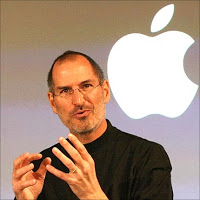
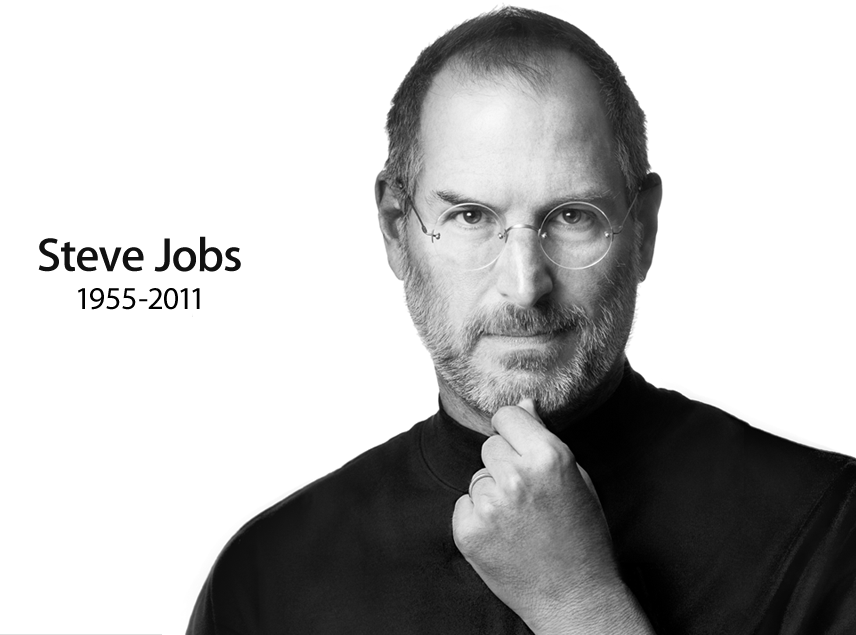
Stay Hungry. Stay Foolish: Steve Jobs' speech at Stanford University

This is a prepared text of the Commencement address delivered by Steve Jobs, CEO of Apple Computer and of Pixar Animation Studios, on June 12, 2005.
I am honored to be with you today at your commencement from one of the finest universities in the world. I never graduated from college. Truth be told, this is the closest I've ever gotten to a college graduation. Today I want to tell you three stories from my life. That's it. No big deal. Just three stories.
The first story is about connecting the dots.
I dropped out of Reed College after the first 6 months, but then stayed around as a drop-in for another 18 months or so before I really quit. So why did I drop out?
It started before I was born. My biological mother was a young, unwed college graduate student, and she decided to put me up for adoption. She felt very strongly that I should be adopted by college graduates, so everything was all set for me to be adopted at birth by a lawyer and his wife. Except that when I popped out they decided at the last minute that they really wanted a girl. So my parents, who were on a waiting list, got a call in the middle of the night asking: "We have an unexpected baby boy; do you want him?" They said: "Of course." My biological mother later found out that my mother had never graduated from college and that my father had never graduated from high school. She refused to sign the final adoption papers. She only relented a few months later when my parents promised that I would someday go to college.

And 17 years later I did go to college. But I naively chose a college that was almost as expensive as Stanford, and all of my working-class parents' savings were being spent on my college tuition. After six months, I couldn't see the value in it. I had no idea what I wanted to do with my life and no idea how college was going to help me figure it out. And here I was spending all of the money my parents had saved their entire life. So I decided to drop out and trust that it would all work out OK. It was pretty scary at the time, but looking back it was one of the best decisions I ever made. The minute I dropped out I could stop taking the required classes that didn't interest me, and begin dropping in on the ones that looked interesting.
It wasn't all romantic. I didn't have a dorm room, so I slept on the floor in friends' rooms, I returned coke bottles for the 5¢ deposits to buy food with, and I would walk the 7 miles across town every Sunday night to get one good meal a week at the Hare Krishna temple. I loved it. And much of what I stumbled into by following my curiosity and intuition turned out to be priceless later on. Let me give you one example:
Reed College at that time offered perhaps the best calligraphy instruction in the country. Throughout the campus every poster, every label on every drawer, was beautifully hand calligraphed. Because I had dropped out and didn't have to take the normal classes, I decided to take a calligraphy class to learn how to do this. I learned about serif and san serif typefaces, about varying the amount of space between different letter combinations, about what makes great typography great. It was beautiful, historical, artistically subtle in a way that science can't capture, and I found it fascinating.
None of this had even a hope of any practical application in my life. But ten years later, when we were designing the first Macintosh computer, it all came back to me. And we designed it all into the Mac. It was the first computer with beautiful typography. If I had never dropped in on that single course in college, the Mac would have never had multiple typefaces or proportionally spaced fonts. And since Windows just copied the Mac, it's likely that no personal computer would have them. If I had never dropped out, I would have never dropped in on this calligraphy class, and personal computers might not have the wonderful typography that they do. Of course it was impossible to connect the dots looking forward when I was in college. But it was very, very clear looking backwards ten years later.
Again, you can't connect the dots looking forward; you can only connect them looking backwards. So you have to trust that the dots will somehow connect in your future. You have to trust in something — your gut, destiny, life, karma, whatever. This approach has never let me down, and it has made all the difference in my life.
My second story is about love and loss.
I was lucky — I found what I loved to do early in life. Woz and I started Apple in my parents garage when I was 20. We worked hard, and in 10 years Apple had grown from just the two of us in a garage into a $2 billion company with over 4000 employees. We had just released our finest creation — the Macintosh — a year earlier, and I had just turned 30. And then I got fired. How can you get fired from a company you started? Well, as Apple grew we hired someone who I thought was very talented to run the company with me, and for the first year or so things went well. But then our visions of the future began to diverge and eventually we had a falling out. When we did, our Board of Directors sided with him. So at 30 I was out. And very publicly out. What had been the focus of my entire adult life was gone, and it was devastating.
I really didn't know what to do for a few months. I felt that I had let the previous generation of entrepreneurs down - that I had dropped the baton as it was being passed to me. I met with David Packard and Bob Noyce and tried to apologize for screwing up so badly. I was a very public failure, and I even thought about running away from the valley. But something slowly began to dawn on me — I still loved what I did. The turn of events at Apple had not changed that one bit. I had been rejected, but I was still in love. And so I decided to start over.
I didn't see it then, but it turned out that getting fired from Apple was the best thing that could have ever happened to me. The heaviness of being successful was replaced by the lightness of being a beginner again, less sure about everything. It freed me to enter one of the most creative periods of my life.
During the next five years, I started a company named NeXT, another company named Pixar, and fell in love with an amazing woman who would become my wife. Pixar went on to create the worlds first computer animated feature film, Toy Story, and is now the most successful animation studio in the world. In a remarkable turn of events, Apple bought NeXT, I returned to Apple, and the technology we developed at NeXT is at the heart of Apple's current renaissance. And Laurene and I have a wonderful family together.
I'm pretty sure none of this would have happened if I hadn't been fired from Apple. It was awful tasting medicine, but I guess the patient needed it. Sometimes life hits you in the head with a brick. Don't lose faith. I'm convinced that the only thing that kept me going was that I loved what I did. You've got to find what you love. And that is as true for your work as it is for your lovers. Your work is going to fill a large part of your life, and the only way to be truly satisfied is to do what you believe is great work. And the only way to do great work is to love what you do. If you haven't found it yet, keep looking. Don't settle. As with all matters of the heart, you'll know when you find it. And, like any great relationship, it just gets better and better as the years roll on. So keep looking until you find it. Don't settle.
My third story is about death.
When I was 17, I read a quote that went something like: "If you live each day as if it was your last, someday you'll most certainly be right." It made an impression on me, and since then, for the past 33 years, I have looked in the mirror every morning and asked myself: "If today were the last day of my life, would I want to do what I am about to do today?" And whenever the answer has been "No" for too many days in a row, I know I need to change something.
Remembering that I'll be dead soon is the most important tool I've ever encountered to help me make the big choices in life. Because almost everything — all external expectations, all pride, all fear of embarrassment or failure - these things just fall away in the face of death, leaving only what is truly important. Remembering that you are going to die is the best way I know to avoid the trap of thinking you have something to lose. You are already naked. There is no reason not to follow your heart.
About a year ago I was diagnosed with cancer. I had a scan at 7:30 in the morning, and it clearly showed a tumor on my pancreas. I didn't even know what a pancreas was. The doctors told me this was almost certainly a type of cancer that is incurable, and that I should expect to live no longer than three to six months. My doctor advised me to go home and get my affairs in order, which is doctor's code for prepare to die. It means to try to tell your kids everything you thought you'd have the next 10 years to tell them in just a few months. It means to make sure everything is buttoned up so that it will be as easy as possible for your family. It means to say your goodbyes.
I lived with that diagnosis all day. Later that evening I had a biopsy, where they stuck an endoscope down my throat, through my stomach and into my intestines, put a needle into my pancreas and got a few cells from the tumor. I was sedated, but my wife, who was there, told me that when they viewed the cells under a microscope the doctors started crying because it turned out to be a very rare form of pancreatic cancer that is curable with surgery. I had the surgery and I'm fine now.
This was the closest I've been to facing death, and I hope it's the closest I get for a few more decades. Having lived through it, I can now say this to you with a bit more certainty than when death was a useful but purely intellectual concept:
No one wants to die. Even people who want to go to heaven don't want to die to get there. And yet death is the destination we all share. No one has ever escaped it. And that is as it should be, because Death is very likely the single best invention of Life. It is Life's change agent. It clears out the old to make way for the new. Right now the new is you, but someday not too long from now, you will gradually become the old and be cleared away. Sorry to be so dramatic, but it is quite true.
Your time is limited, so don't waste it living someone else's life. Don't be trapped by dogma — which is living with the results of other people's thinking. Don't let the noise of others' opinions drown out your own inner voice. And most important, have the courage to follow your heart and intuition. They somehow already know what you truly want to become. Everything else is secondary.
When I was young, there was an amazing publication called The Whole Earth Catalog, which was one of the bibles of my generation. It was created by a fellow named Stewart Brand not far from here in Menlo Park, and he brought it to life with his poetic touch. This was in the late 1960's, before personal computers and desktop publishing, so it was all made with typewriters, scissors, and polaroid cameras. It was sort of like Google in paperback form, 35 years before Google came along: it was idealistic, and overflowing with neat tools and great notions.
Stewart and his team put out several issues of The Whole Earth Catalog, and then when it had run its course, they put out a final issue. It was the mid-1970s, and I was your age. On the back cover of their final issue was a photograph of an early morning country road, the kind you might find yourself hitchhiking on if you were so adventurous. Beneath it were the words: "Stay Hungry. Stay Foolish." It was their farewell message as they signed off. Stay Hungry. Stay Foolish. And I have always wished that for myself. And now, as you graduate to begin anew, I wish that for you.
Stay Hungry. Stay Foolish.
Thank you all very much.
Read More

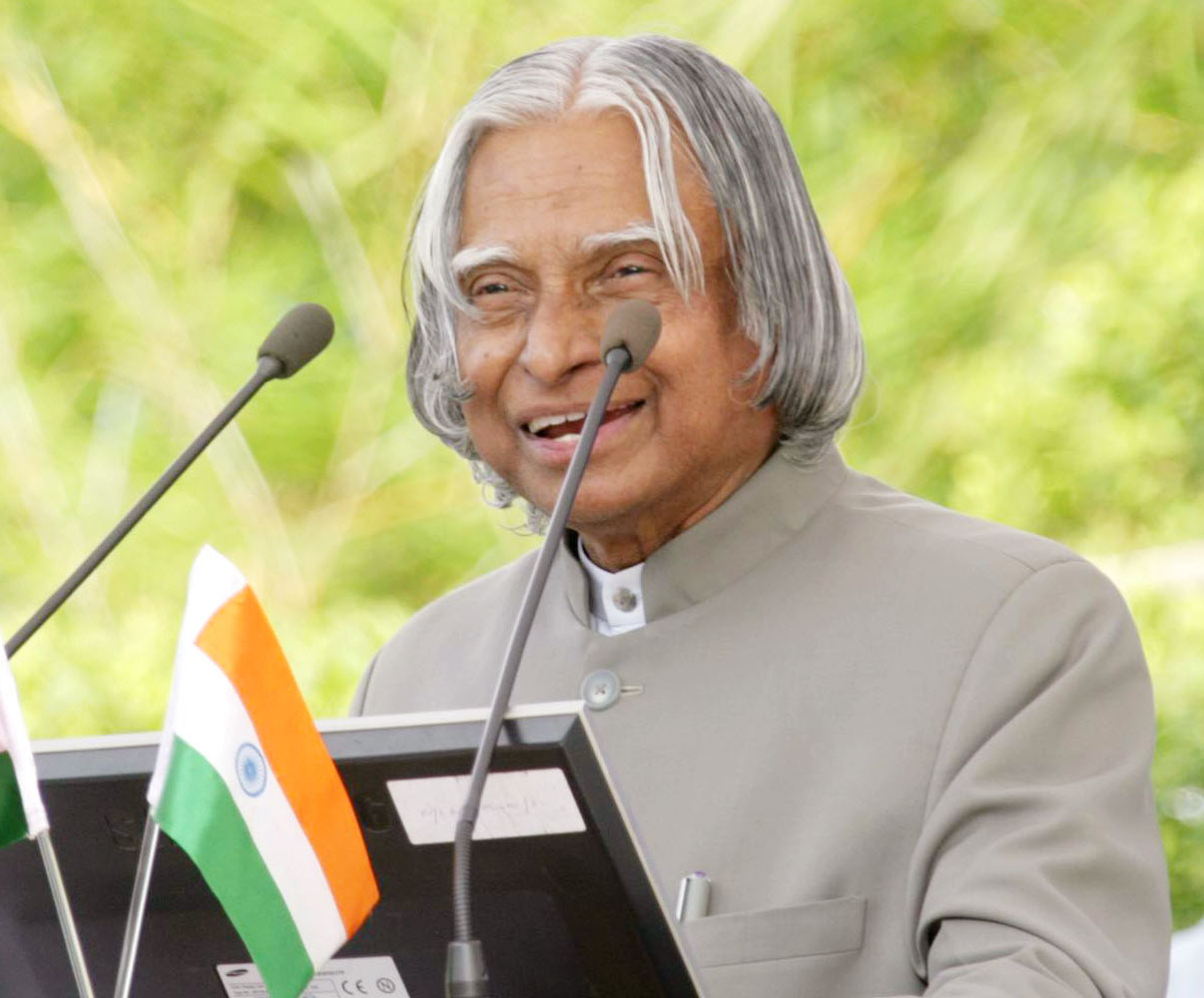
Three visions for India: Dr. APJ Abdul Kalam's Speech@Hyderabad


I have three visions for India. In 3000 years of our history people from all over the world have come and invaded us, captured our lands, conquered our minds. From Alexander onwards. The Greeks, the Turks, the Moguls, the Portuguese, the British, the French, the Dutch, all of them came and looted us, took over what was ours. Yet we have not done this to any other nation. We have not conquered anyone. We have not grabbed their land, their culture, their history and tried to enforce our way of life on them. Why? Because we respect the freedom of others. That is why my first vision is that of FREEDOM. I believe that India got its first vision of this in 1857, when we started the war of independence. It is this freedom that we must protect and nurture and build on. If we are not free, no one will respect us.


My second vision for India is DEVELOPMENT. For fifty years we have been a developing nation. It is time we see ourselves as a developed nation. We are among top 5 nations of the world in terms of GDP. We have 10 percent growth rate in most areas. Our poverty levels are falling. Our achievements are being globally recognized today. Yet we lack the self-confidence to see ourselves as a developed nation, self-reliant and self-assured. Isn't this incorrect?

I have a THIRD vision. India must stand up to the world. Because I believe that unless India stands up to the world, no one will respect us. Only strength respects strength. We must be strong not only as a military power but also as an economic power. Both must go hand-in-hand. My good fortune was to have worked with three great minds. Dr. Vikram Sarabhai of the Dept. of space, Professor Satish Dhawan, who succeeded him and Dr. Brahm Prakash, father of nuclear material. I was lucky to have worked with all three of them closely and consider this the great opportunity of my life.

I see four milestones in my career: 
ONE: Twenty years I spent in ISRO. I was given the opportunity to be the project director for India's first satellite launch vehicle, SLV3. The one that launched Rohini. These years played a very important role in my life of Scientist.

TWO: After my ISRO years, I joined DRDO and got a chance to be the part of India's missile program. It was my second bliss when Agni met its mission requirements in 1994.

THREE: The Dept. of Atomic Energy and DRDO had this tremendous partnership in the recent nuclear tests, on May 11 and 13. This was the third bliss. The joy of participating with my team in these nuclear tests and proving to the world that India can make it, that we are no longer a developing nation but one of them. It made me feel very proud as an Indian. The fact that we have now developed for Agni a re-entry structure, for which we have developed this new material. A Very light material called carbon-carbon.

FOUR: One day an orthopedic surgeon from Nizam Institute of Medical Sciences visited my laboratory. He lifted the material and found it so light that he took me to his hospital and showed me his patients. There were these little girls and boys with heavy metallic calipers weighing over three kg. each, dragging their feet around. He said to me: Please remove the pain of my patients. In three weeks, we made these Floor reaction Orthosis 300 gram calipers and took them to the orthopedic centre. The children didn't believe their eyes. From dragging around a three kg. load on their legs, they could now move around! Their parents had tears in their eyes. That was my fourth bliss!

Why is the media here so negative? Why are we in India so embarrassed to recognize our own strengths, our achievements? We are such a great nation. We have so many amazing success stories but we refuse to acknowledge them. Why? We are the first in milk production. We are number one in Remote sensing satellites. We are the second largest producer of wheat. We are the second largest producer of rice. Look at Dr. Sudarshan, he has transferred the tribal village into a self-sustaining, self-driving unit. There are millions of such achievements but our media is only obsessed in the bad news and failures and disasters.

I was in Tel Aviv once and I was reading the Israeli newspaper. It was the day after a lot of attacks and bombardments and deaths had taken place. The Hamas had struck. But the front page of the newspaper had the picture of a Jewish gentleman who in five years had transformed his desert land into an orchid and a granary. It was this inspiring picture that everyone woke up to. The gory details of killings, bombardments, deaths, were inside in the newspaper, buried among other news. In India we only read about death, sickness, terrorism, crime. Why are we so NEGATIVE? Another question: Why are we, as a nation so obsessed with foreign things? We want foreign TVs, we want foreign shirts. We want foreign technology. Why this obsession with everything imported. Do we not realize that self-respect comes with self-reliance?

I was in Hyderabad giving this lecture, when a 14 year old girl asked me for my autograph. I asked her what her goal in life is: She replied: I want to live in a developed India. For her, you and I will have to build this developed India. You must proclaim. India is not an under-developed nation; it is a highly developed nation.

Allow me to come back with vengeance. Got 10 minutes for your country?
YOU say that our government is inefficient. YOU say that our laws are too old. YOU say that the municipality does not pick up the garbage. YOU say that the phones don't work, the railways are a joke, the airline is the worst in the world, mails never reach their destination. YOU say that our country has been fed to the dogs and is the absolute pits. YOU say, say and say.

What do YOU do about it? Take a person on his way to Singapore. Give him a name - YOURS. Give him a face - YOURS. YOU walk out of the airport and you are at your International best. In Singapore you don't throw cigarette butts on the roads or eat in the stores. YOU are as proud of their Underground Links as they are. You pay $5 (approx. Rs. 60) to drive through Orchard Road (equivalent of Mahim Causeway or Pedder Road) between 5 PM and 8 PM.

YOU comeback to the parking lot to punch your parking ticket if you have over stayed in a restaurant or a shopping mall irrespective of your status identity. In Singapore you don't say anything, DO YOU? YOU wouldn't dare to eat in public during Ramadan, in Dubai. YOU would not dare to go out without your head covered in Jeddah. YOU would not dare to buy an employee of the telephone exchange in London at 10 pounds (Rs. 650) a month to, "see to it that my STD and ISD calls are billed to someone else." YOU would not dare to speed beyond 55 mph (88 kph) in Washington and then tell the traffic cop, "Jaanta hai sala main kaun hoon (Do you know who I am?). I am so and so's son. Take your two bucks and get lost." YOU wouldn't chuck an empty coconut shell anywhere other than the garbage pail on the beaches in Australia and New Zealand. Why don't YOU spit Paan on the streets of Tokyo? Why don't YOU use examination jockeys or buy fake certificates in Boston? We are still talking of the same YOU. YOU who can respect and conform to a foreign system in other countries but cannot in your own. You who will throw papers and cigarettes on the road the moment you touch Indian ground. If you can be an involved and appreciative citizen in an alien country why cannot you be the same here in India. Once in an interview, the famous Ex-municipal commissioner of Bombay Mr.Tinaikar had a point to make. "Rich people's dogs are walked on the streets to leave their affluent droppings all over the place," he said. "And then the same people turn around to criticize and blame the authorities for inefficiency and dirty pavements. What do they expect the officers to do? Go down with a broom every time their dog feels the pressure in his bowels? In America every dog owner has to clean up after his pet has done the job. Same in Japan. Will the Indian citizen do that here?" He's right. We go to the polls to choose a government and after that forfeit all responsibility. We sit back wanting to be pampered and expect the government to do everything for us whilst our contribution is totally negative. We expect the government to clean up but we are not going to stop chucking garbage all over the place nor are we going to stop to pick a up a stray piece of paper and throw it in the bin. We expect the railways to provide clean bathrooms but we are not going to learn the proper use of bathrooms. We want Indian Airlines and Air India to provide the best of food and toiletries but we are not going to stop pilfering at the least opportunity. This applies even to the staff who is known not to pass on the service to the public. When it comes to burning social issues like those related to women, dowry, girl child and others, we make loud drawing room protestations and continue to do the reverse at home. Our excuse? "It's the whole system which has to change, how will it matter if I alone forego my sons' rights to a dowry." So who's going to change the system? What does a system consist of? Very conveniently for us it consists of our neighbors, other households, other cities, other communities and the government. But definitely not me and YOU. When it comes to us actually making a positive contribution to the system we lock ourselves along with our families into a safe cocoon and look into the distance at countries far away and wait for a Mr. Clean to come along & work miracles for us with a majestic sweep of his hand. Or we leave the country and run away. Like lazy cowards hounded by our fears we run to America to bask in their glory and praise their system. When New York becomes insecure we run to England. When England experiences unemployment, we take the next flight out to the Gulf. When the Gulf is war struck, we demand to be rescued and brought home by the Indian government. Everybody is out to abuse and rape the country. Nobody thinks of feeding the system. Our conscience is mortgaged to money.

Dear Indians, The article is highly thought inductive, calls for a great deal of introspection and pricks one's conscience too....I am echoing J.F. Kennedy's words to his fellow Americans to relate to Indians.....

"ASK WHAT WE CAN DO FOR INDIA AND DO WHAT HAS TO BE DONE TO MAKE INDIA WHAT AMERICA AND OTHER WESTERN COUNTRIES ARE TODAY"
Lets do what India needs from us.

E-Mail address of Bharataratna Dr. A.P.J Abdul Kalam is [email protected]
Read More